
UK semi-commercial property investment finance
Mixed-Use Buy-to-Let Mortgages
Buying a shop with flats above, or refinancing a building that combines business and residential tenants? Mixed-use buy-to-let mortgages are assessed around both parts of the investment. Understand the structure, income and property checks before applying.

The essentials
What is a mixed-use buy-to-let mortgage?
Mixed-use buy-to-let finance is used for an investment property with both residential accommodation and a commercial element.
Imagine buying a freehold building with a shop on the ground floor and two self-contained flats above it. The shop may have a commercial lease, while the flats are occupied under residential tenancy arrangements. Both can contribute to the property’s income, but each carries different lending risks.
These mortgages are also described as semi-commercial mortgages or mixed-use investment mortgages. Lenders may use different names and criteria. A building is not automatically eligible just because it contains a flat and a business unit.
Lockwell Finance can help you organise the transaction details, review relevant criteria and explore an appropriate route. Whether finance is available, and on what terms, remains the lender’s decision.
Types of mixed-use property
Not every mixed-use building is the same.
Lenders will consider how much of the building is commercial, how each part is let and whether the property has suitable access, planning use and mortgageable legal titles.
Shop with flats above
A retail unit on the ground floor with one or more homes upstairs. Commercial and residential tenants may have different lease lengths, obligations and income patterns.
Office with residential units
A small office and residential flats in the same property. Lender assessment may focus on occupancy, independent access, lease rights and whether income is sustainable.
Café or restaurant with accommodation
Hospitality or food-use premises with a flat or several residential units. Specialist commercial use, extraction, noise, licensing and re-letting demand can affect appetite.
Multiple shops and apartments
Buildings with several commercial units and flats. Rent schedules, title arrangements, vacant units and concentration of tenancy income become important.
Partially vacant mixed-use buildings
An empty shop or vacant residential unit can affect rent cover. Significant works or conversion plans may require bridging or refurbishment finance first.
Limited company or SPV investments
Some lenders consider suitable company borrowers. The shareholding, directors, guarantees and property title can influence the available route.
Examples are not lender acceptance guarantees. A building may have mixed occupancy without meeting a particular lender’s definition of eligible semi-commercial security.
Semi-commercial mortgage underwriting
How lenders assess mixed-use buy-to-let.
The lender is evaluating two income streams and one or more types of property risk. It may look beyond the headline rent and ask how the building performs if either part becomes vacant.
- 1. Commercial and residential split
How much of the building is used for each purpose, the layout, planning use and whether residential units have separate access can matter. Lenders do not all apply the same split or valuation rules.
- 2. Rent from each part
A lender may review commercial rent, residential rent, arrears, market rent, occupancy and the potential effect of losing one tenant. Not all rent is necessarily counted at its full stated amount.
- 3. Lease terms and tenant quality
Commercial lease length, tenant covenant, break clauses, repairing obligations and rent reviews are relevant. Residential tenancy type, permitted occupation and achievable rent also need review.
- 4. Condition, access and valuation
The valuer may consider the components of the property, construction, building services, compliance, local demand and resale prospects. A low valuation can reduce the loan amount.
- 5. Loan-to-value and cash contribution
The deposit depends on lender criteria, valuation, property mix and repayment capacity. Semi-commercial property can have different maximum LTVs from standard residential buy-to-let.
- 6. Borrower and borrowing structure
Experience, credit, trading and company information, financial commitments, proposed ownership and any guarantees may be reviewed. An SPV or individual investor does not automatically qualify.
- 7. Repayment strategy
Interest-only or capital repayment, loan term, rate type, refinance plans and early repayment costs should be assessed together. A lender may use its own rental coverage and stress-rate tests.
Illustrative mixed-use investment
How the property and income fit together.
A mixed-use buy-to-let mortgage can depend on the entire property’s value and rental position—not simply the rent from the flats.
Suppose an investor is buying a building with a ground-floor shop and two flats for £500,000, using £175,000 of their own funds towards the price. A £325,000 loan would be 65% of that purchase price, before lender valuation or eligibility checks.
The investor expects rent from both the shop and flats. A lender will determine which income is acceptable, apply any assessment assumptions and consider whether the property remains viable if a unit is vacant.
£325,000 ÷ £500,000 = 65%. Illustrative gross rent is £37,200 annually before voids, management, insurance, repairs, tax, finance costs and other expenditure. This is not a rental forecast, stress-test pass or mortgage offer.
A lower bank valuation, unsuitable tenancy, uncertain commercial rent or insufficient serviceability can mean a smaller loan or no offer. Budget for deposit plus fees and transaction taxes.
Financing different investment situations
Purchase, refinance or prepare for a change of use.
The correct product depends on the building’s current use and condition, not simply the owner’s plans for it.
Buy a shop with flats above
Discuss purchase price, deposits, existing leases, unit-by-unit rent and whether the lender is comfortable with the property mix.
Discuss a mixed-use purchase →Remortgage a semi-commercial property
Review the current mortgage, valuation, occupancy, lease terms and desired outcome. Check potential early repayment charges before switching.
Explore commercial refinancing →Company ownership or refurbishment
A company borrower or property needing significant work can require specialist lender evidence and, in some cases, alternative short-term finance.
Explore SPV commercial finance →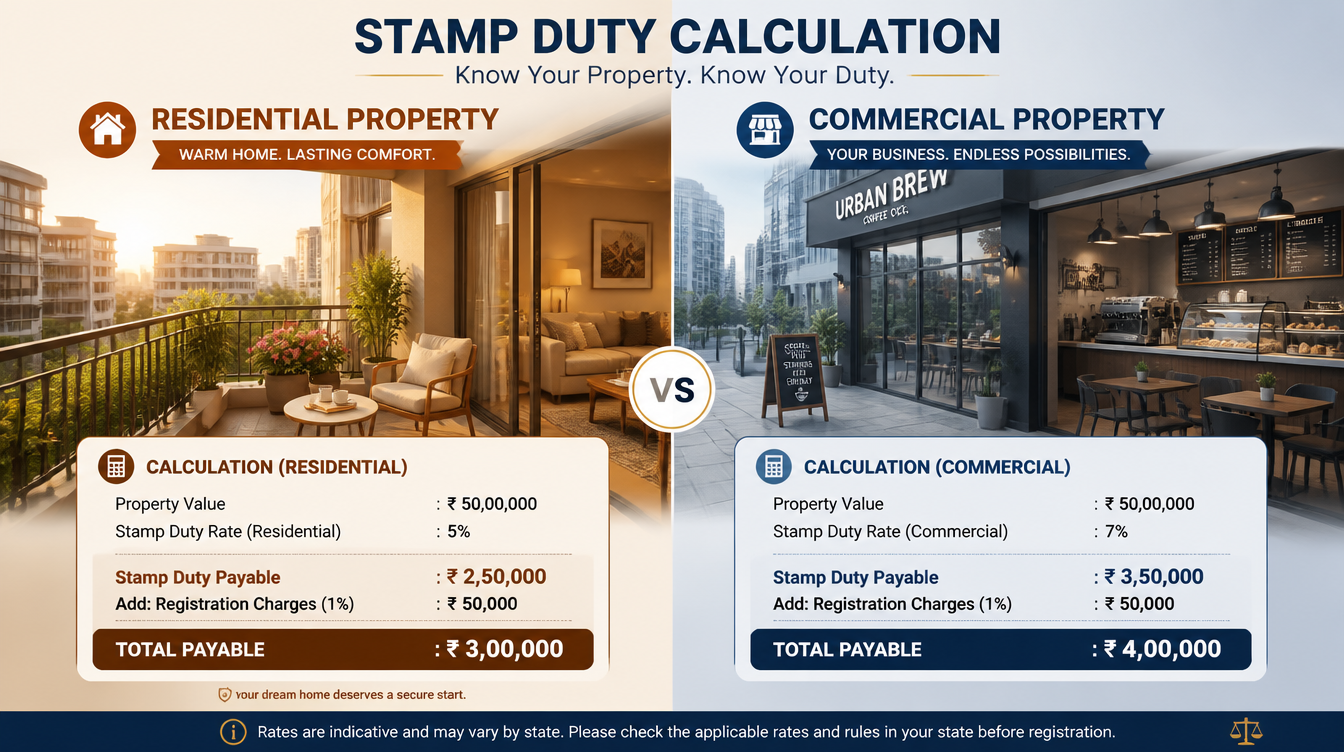
Mixed-use property tax deserves a separate check.
Where a purchase genuinely contains residential and non-residential property, its transaction tax treatment can differ from buying a wholly residential rental property. SDLT applies in England and Northern Ireland; Scotland and Wales use their own transaction taxes.
Classification depends on the actual facts and legal interests transferred. Do not assume a shopfront alone guarantees any tax treatment or saving.
Read Lockwell’s mixed-use stamp duty guide → · HMRC mixed-use SDLT information →
The financing process
Four steps from enquiry to lender decision.
Timescales and documents differ by property, borrower and lender. No approval or rate can be guaranteed.
Describe the building
Share the address, commercial-residential layout, rent schedule, price or value, borrower and loan required.
Check lender appetite
Consider the property split, leases, income, deposit and whether a semi-commercial product fits the circumstances.
Prepare documents
Gather title, lease, tenancy, company or personal records and any financial information requested.
Valuation and legal checks
The lender undertakes credit and property assessment, subject to underwriting, valuation and completion conditions.
Fees and property costs
Understand what the transaction will cost.
A seemingly attractive combined rental income may not translate into strong net cash flow once all financing and property costs are considered.
Mortgage and broker charges
Compare interest, lender arrangement fees, valuation, legal work, broker booking and completion fees, and potential early repayment charges. Lockwell’s published fee schedules differ between BTL and commercial finance, so confirm in writing which schedule applies to your mixed-use case.
Property running costs
Allow for residential repairs, commercial maintenance responsibilities, management, buildings insurance, void periods, service charges where relevant, and compliance for both types of use.
Tax and acquisition costs
Budget for relevant transaction taxes, conveyancing and searches. Ownership through a company can have different tax consequences; consult your solicitor and tax adviser before committing.
Compare the commercial mortgage broker information with the buy-to-let mortgage hub for Lockwell’s published fee context. A mixed-use application should receive a case-specific written fee disclosure. No rates or lender acceptance are represented as live offers on this page.
Frequently asked questions
Mixed-use buy-to-let mortgage FAQs
Common questions investors ask about shops with flats above and semi-commercial mortgage lending.
Can I get a mortgage on a shop with a flat above it?
Potentially. A shop with a flat above can be suitable for semi-commercial or mixed-use lending if the property, title, tenancy arrangements and borrower meet the lender’s criteria. A standard residential BTL product may not be the right fit for the whole building.
Is a mixed-use mortgage the same as a semi-commercial mortgage?
In many UK investment-finance discussions, the terms are used for similar property: a building containing both commercial and residential accommodation. Lenders still apply their own definitions and may classify a particular case differently.
How much deposit is needed for a mixed-use buy-to-let mortgage?
There is no universal percentage. The loan-to-value limit depends on the lender’s valuation, property composition, location, borrower, occupancy and income. The 65% LTV example on this page is arithmetic only—not an advertised product or guaranteed deposit level.
Will a lender count both shop rent and flat rent?
A lender may consider rent from both uses but can apply different assessments to each. For example, the shop’s lease term and tenant covenant might be assessed separately from the residential units’ letting income. Some income may be discounted or disregarded depending on evidence and lender policy.
Can I buy mixed-use property through a limited company or SPV?
Potentially. Some lenders consider eligible company borrowers, subject to their appetite for the building and business structure. Directors, shareholders, existing finances and any requested guarantees may be relevant. Company ownership should be reviewed with tax and legal advisers.
What if the shop is empty but the flats are let?
A vacant commercial unit may reduce income available for servicing and affect the valuation or marketability. A lender may ask for a credible letting strategy, increased equity or another finance route. The remaining residential income does not automatically guarantee eligibility.
Can I finance a mixed-use building that needs refurbishment?
Possibly, but property condition, planning position, works costs and whether it can be occupied or let may rule out some long-term products. Bridging or specialist refurbishment finance may be more appropriate initially, with a properly assessed exit strategy.
Does mixed-use property qualify for different stamp duty rates?
A genuinely mixed residential and non-residential transaction may be assessed using non-residential/mixed SDLT rules in England and Northern Ireland. The classification must be supported by the property’s actual use and legal facts. Wales and Scotland have separate tax regimes. Take conveyancer and tax advice rather than assuming a lower bill.
Are all mixed-use buy-to-let mortgages unregulated?
No blanket answer is safe. Regulation depends on who borrows, the security, occupancy and the specific transaction. Certain loans secured on mixed-use property may fall within regulated mortgage or consumer buy-to-let rules. Lockwell states that the advice it gives is not FCA regulated. Where a regulated or consumer buy-to-let arrangement is involved, consult an appropriately authorised or registered provider. See FCA perimeter guidance.
What should I send when enquiring?
Start with the address, property layout and use, purchase price or estimated value, rental income for each unit, leases, outstanding borrowing if refinancing, required loan, available equity and target date. Lockwell can then indicate the next information required. Share personal financial documents only through an agreed secure route.
Mixed-use property finance enquiries
Investing in a shop and flats—or refinancing one?
Tell Lockwell Finance about the building, commercial and residential rents, price or value, proposed borrower and amount needed. The team can discuss a relevant route and next steps, subject to lender criteria and any regulatory restrictions.