



Student accommodation can be one of the most attractive areas of the UK rental market, but it is not assessed in the same way as a simple single-let property. A student let BTL mortgage may need to satisfy standard buy-to-let affordability checks, student rental assumptions, HMO rules, licensing requirements and, in some cases, specialist lender criteria.
For landlords, the appeal is clear. Student lets can produce strong rental yields, regular annual demand around university intake cycles and the potential for multiple tenants within one property. But the risk profile is also different. Lenders will want to understand who the tenants are, how the property will be managed, whether it needs an HMO licence, how rental income is evidenced and whether the landlord has the experience to run a student rental properly.
This guide explains how student property BTL finance works, what lenders usually look for, how student HMO mortgage criteria differ from standard buy-to-let, and how to prepare a stronger application before approaching a lender.
If you are buying, refinancing or restructuring a student rental property, Lockwell Finance can review your deal and help you understand the most realistic route before you apply.
What Is a Student Let BTL Mortgage?
A student let BTL mortgage is a buy-to-let mortgage used to purchase or refinance a property that will be rented to students. The property may be:
- A house rented to a small group of students
- A flat let to one or two students
- A shared student house with multiple unrelated tenants
- A licensed HMO near a university
- A student rental held personally or through a limited company/SPV
The key difference is the tenant profile and the rental structure. A lender assessing student rental finance in the UK will want to know whether the property is a standard student let or a student HMO, because this can affect the product type, deposit level, valuation, licence requirements and underwriting process.
Student Let vs Student HMO: Why the Difference Matters
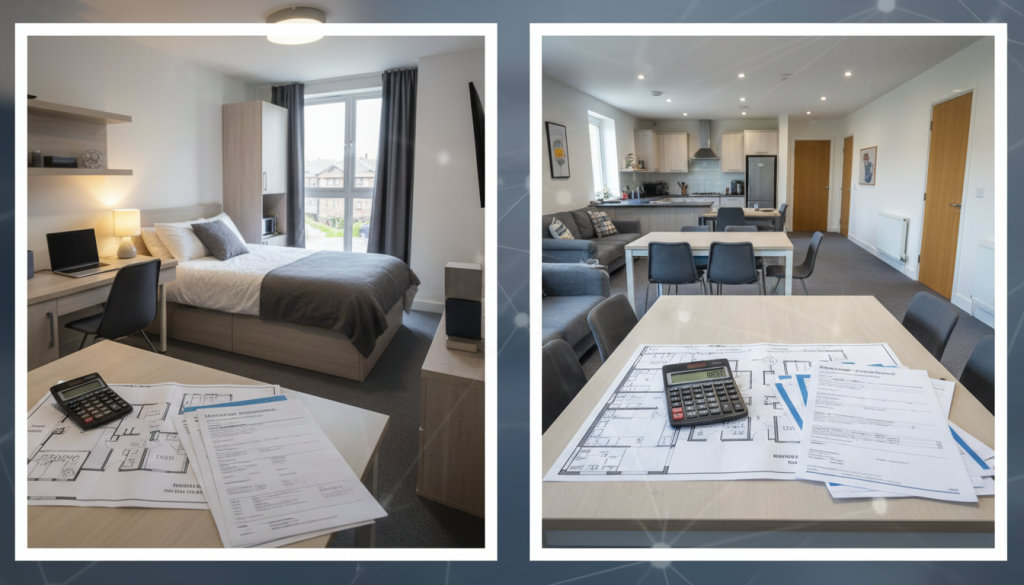
Not every student rental is automatically an HMO, but many student houses become HMOs because the tenants are unrelated and share facilities.
A simple student let might involve one or two students renting a flat, or a small group of students in a property that does not trigger mandatory licensing. A student HMO usually involves multiple unrelated students sharing kitchens, bathrooms or communal areas.
This matters because HMO properties are treated as more complex by many lenders. They may require:
- A specialist HMO mortgage product
- A higher deposit
- Evidence of HMO licensing, where required
- A valuation based on HMO use rather than standard residential use
- A more experienced landlord profile
- Confirmation of room sizes, safety standards and management arrangements
- A clearer explanation of the tenancy model
In practical terms, a standard buy-to-let lender may be comfortable with a small student let but not with a five-bedroom student HMO. A specialist lender may be needed if the property has multiple rooms, individual tenancy agreements, a licence requirement or a more commercial-style rental model.
Why Landlords Invest in Student Accommodation
Student accommodation remains attractive because demand is often concentrated around established university locations. A well-positioned student property can provide consistent annual letting opportunities, particularly where there is limited suitable housing near campus, strong public transport access and a large student population.
The main benefits include:
- Higher rental yield potential compared with some single-let properties
- Demand linked to university calendars and academic years
- Multiple tenants reducing reliance on a single occupier
- Potential guarantor-backed tenancy structures
- Opportunities to improve income through layout, furnishing and management
- Long-term demand in strong university cities
However, higher income potential does not automatically mean lower risk. Student properties can involve more wear and tear, more active management, seasonal void planning, parental guarantors, council licensing and stricter safety requirements. Lenders know this, which is why the application must be prepared properly.
What Lenders Look for in a Student Let BTL Mortgage

Lenders are not only asking, “Will the rent cover the mortgage?” They are also asking, “Is this property suitable for the intended use, and can the borrower manage the risk?”
Property Type and Layout
The property itself is the starting point. Lenders will review the size, condition, layout, location and suitability for student occupation.
They may ask:
- Is the property a house, flat, maisonette or converted property?
- How many tenants will live there?
- How many bedrooms are being let?
- Are rooms suitable in size and condition?
- Are facilities shared?
- Is there a suitable kitchen and bathroom provision?
- Is the property already let to students or being converted?
- Does the property need refurbishment before letting?
Properties that need substantial works may not be suitable for a normal BTL mortgage immediately. In those cases, refurbishment finance or bridging finance may be considered before moving onto longer-term buy-to-let lending.
Rental Income and Affordability
Buy-to-let affordability is usually based heavily on rental income. For student property, the lender will look at the expected rent and whether it supports the loan under their stress-testing model.
Rental evidence may include:
- Existing tenancy agreements
- Letting agent rental appraisal
- Comparable local student rents
- Room-by-room income breakdown
- Evidence of previous rental income
- Details of whether bills are included or excluded
- Confirmation of annual or academic-year letting terms
Student HMOs may show stronger gross rent than a single-let property, but lenders will also consider the sustainability of that rent. Over-optimistic rental projections can cause problems during valuation, so it is better to use realistic local figures.
Deposit and Loan-to-Value
Student lets can sometimes be funded at similar loan-to-value levels to standard buy-to-let, but larger HMOs or more complex properties may require a bigger deposit.
As a broad guide:
- Smaller student lets may be closer to standard buy-to-let deposit expectations
- Larger student HMOs may need a lower LTV
- First-time landlords may have fewer options than experienced landlords
- Complex properties may need specialist lender assessment
- Limited company applications may have different product availability
A stronger deposit can improve lender choice, pricing and application resilience, especially where the property is an HMO or the borrower has limited experience.
Landlord Experience
Experience can be important for student accommodation. Some lenders are comfortable with first-time landlords, but others prefer applicants who already own or manage rental property, especially for student HMOs.
Lenders may consider:
- Whether you are a first-time landlord
- Whether you have managed HMOs before
- Whether you already own buy-to-let properties
- Your wider property investment experience
- Whether a professional letting agent will manage the property
- Whether the property is already tenanted and income-producing
If you are a new landlord, the application must be especially clear. A detailed management plan, realistic rental evidence and strong borrower profile can help reduce concerns.
HMO Licensing and Local Authority Rules
Student HMOs can fall under mandatory, additional or selective licensing depending on the number of occupants and the local council’s rules.
This is one of the most important checks before buying a student property. Licensing requirements can affect:
- Whether the property can legally be let as planned
- The valuation outcome
- The lender’s willingness to proceed
- Required works before completion
- Fire safety, room size and amenity standards
- The long-term cost of running the property
Before making an offer, landlords should check the local authority position and confirm whether the property needs a licence now or will need one after conversion.
Tenancy Structure and Guarantors
Student lets often use joint tenancy agreements, individual room agreements or guarantor-backed arrangements. The lender may want to understand how rent will be collected and how risk will be managed if one tenant leaves.
A strong student rental setup may include:
- Clear tenancy agreements
- Parental or professional guarantors where appropriate
- Deposit protection
- Inventory and check-in documentation
- Defined responsibility for bills
- A plan for summer voids or shorter occupancy periods
- Professional management if the landlord is not local
The cleaner the tenancy structure, the easier it is for the lender and valuer to understand the income.
Student Accommodation Mortgage Criteria: What to Prepare Before Applying
A well-prepared student let BTL mortgage application should include both the standard buy-to-let documents and property-specific information.
Borrower Documents
Prepare:
- Proof of ID
- Proof of address
- Bank statements
- Income evidence, if required
- Deposit evidence
- Source of funds explanation
- Credit background details
- Portfolio schedule, if you own other properties
If buying through a limited company or SPV, also prepare:
- Company registration details
- Director and shareholder information
- Company bank statements, where relevant
- Confirmation of SIC codes
- Personal guarantees, if required by the lender
- Details of any intercompany loans or director loans used for deposit funding
Property Documents
Prepare:
- Full property address
- Purchase price or estimated value
- Tenure details
- Number of bedrooms and occupants
- Existing or proposed floorplan
- Current tenancy agreements, if already let
- Rental appraisal
- HMO licence details, if applicable
- Planning position, where relevant
- EPC details
- Schedule of required works
- Fire safety and compliance information
- Managing agent details, if applicable
Finance Details
Prepare:
- Required loan amount
- Deposit amount
- Preferred ownership structure
- Whether the property is being purchased or refinanced
- Whether capital raising is required
- Expected rent
- Expected monthly costs
- Target completion date
- Exit plan, if using short-term finance first
The more complete the information, the easier it is to match the case to the right lender.
Standard BTL Mortgage or Specialist Student HMO Mortgage?
The right product depends on the property and how it will be let.
A standard buy-to-let mortgage may be suitable where:
- The property is let to one tenant or a small household
- The student use is simple and low-risk
- There is no HMO complexity
- The property is in good condition
- The tenancy structure is straightforward
- The lender accepts student tenants
A specialist student HMO mortgage may be needed where:
- The property will house multiple unrelated students
- The property needs an HMO licence
- Rooms are let individually
- There are five or more occupants
- The rental income is assessed room by room
- The property has specialist HMO features
- The borrower is using a limited company/SPV
- The property is part of a wider landlord portfolio
The mistake many landlords make is assuming any student property can sit on a standard buy-to-let product. If the lender later discovers HMO use, individual room lets or licensing requirements, the application can be delayed or declined.
Example: How a Student HMO Mortgage Case Might Be Assessed
A landlord wants to buy a five-bedroom house near a university for £375,000. The plan is to rent each room to students for £625 per month, giving a gross rent of £3,125 per month.
At first glance, the rent appears strong. But a lender may still ask:
- Does the property require an HMO licence?
- Are all five rooms acceptable in size?
- Is there enough shared space?
- Are fire doors, alarms and safety measures in place?
- Is the kitchen suitable for the number of occupants?
- Is the landlord experienced enough?
- Is the rent realistic for that street and university market?
- Are bills included in the rent?
- Is the property already compliant or are works needed?
- Will the valuation support the purchase price and rental income?
If the property needs works before it can be let legally, the landlord may need a different funding route at purchase, then refinance once the property is compliant and income-producing.
This is where a deal-led finance review matters. The right question is not just “What is the lowest rate?” It is “Which lender will accept this property, this tenancy model and this borrower profile?”
Buying Student Accommodation Through a Limited Company or SPV
Many landlords consider buying student property through a limited company or SPV. This can be useful for portfolio planning, tax structuring and long-term investment strategy, but it is not automatically the best route for every landlord.
A limited company student property BTL application may involve:
- Director and shareholder checks
- Personal guarantees
- Company bank account setup
- Clear deposit source documentation
- Lender review of company structure
- Different product rates and fees compared with personal ownership
- Additional legal requirements
Before choosing the structure, landlords should speak with a mortgage adviser and a tax professional. The mortgage route, tax position and long-term plan should work together.
Lockwell Finance can help you understand how lenders view SPV student let applications and what documents are usually needed before you submit a case.
Location: What Makes a Strong Student Rental Property?
Student accommodation is not just about buying near any university. Lenders and valuers will consider whether the location supports the rental strategy.
A strong student property location often has:
- Proximity to university campuses
- Good transport links
- Established student rental demand
- Access to shops, gyms, libraries and nightlife
- A local letting market with comparable rents
- Limited oversupply of similar accommodation
- A good balance between purchase price and rental yield
- Evidence that students already rent in the area
Landlords should also check whether the city has large amounts of purpose-built student accommodation. PBSA can be competition, but it does not always replace demand for shared student houses, especially where students prefer lower-cost group living.
The Main Risks of Student Let Buy-to-Let
Student accommodation can be profitable, but it should be assessed carefully.
Seasonal Voids
Many student tenancies follow the academic year. Some properties may have voids over summer unless the tenancy is structured for 11 or 12 months.
Higher Wear and Tear
Student properties may experience more frequent maintenance issues than standard single lets. Landlords should budget for repairs, redecoration and replacement furniture.
Licensing and Compliance Costs
HMO licensing, fire safety upgrades, electrical checks, gas safety, EPC compliance and local authority conditions can all affect profitability.
Management Intensity
Student lets often require more active management, especially at the beginning and end of the academic year.
Valuation Risk
A valuer may not agree with an optimistic rent estimate or purchase price. This can reduce the available loan.
Regulatory Change
Private rented sector rules, licensing requirements and energy efficiency expectations can change over time. Student landlords should build flexibility into their investment plan.
How to Improve Your Chances of Approval
A stronger application is usually built before the lender sees it.
1. Confirm the Property Use Early
Be clear from the start that the property will be let to students. Do not present it as a standard single let if it will operate as a student HMO.
2. Check Licensing Before You Offer
Speak to the local council or review the licensing rules for that area. A property that looks profitable may need costly works before it can be used as planned.
3. Use Realistic Rental Figures
Get a local letting agent appraisal and compare it with live student rental listings. If bills are included, separate the gross rent from the true net position.
4. Prepare the Deposit Trail
Lenders will want to understand where your deposit came from. If funds moved between personal, business or overseas accounts, prepare a clear explanation.
5. Consider Professional Management
If you are not local or you are new to student HMOs, a professional managing agent can make the case more credible.
6. Match the Lender to the Property
Not every buy-to-let lender wants student tenants or HMOs. The right lender must fit the property, tenancy structure, borrower profile and timeline.
7. Review the Total Cost, Not Just the Rate
Arrangement fees, valuation costs, legal fees, licence costs, refurbishment costs and void periods can all affect the true return.
Student Let Mortgage Checklist

Use this checklist before applying.
Property
- Address and property type
- Number of bedrooms
- Number of expected occupants
- Current condition
- Existing or proposed floorplan
- Freehold or leasehold details
- EPC position
- Works required before letting
Rental Strategy
- Student let or student HMO
- Joint tenancy or room-by-room lets
- Expected rent per room or per property
- Whether bills are included
- Guarantor approach
- Managing agent details
- Academic-year or 12-month tenancy plan
Compliance
- HMO licence requirement checked
- Fire safety requirements reviewed
- Electrical and gas safety considered
- Room sizes checked
- Local authority rules reviewed
- Planning position considered, where relevant
Finance
- Purchase price or valuation
- Loan amount required
- Deposit amount
- Source of funds
- Personal or SPV ownership
- Rental appraisal
- Portfolio schedule, if applicable
- Target completion date
Borrower
- Landlord experience
- Income evidence
- Bank statements
- Credit profile
- Existing mortgages
- Company documents, if using an SPV
- ID and proof of address
When Bridging or Refurbishment Finance May Be Better First
A student property is not always mortgage-ready on day one. If the property needs refurbishment, layout changes, fire safety upgrades or licensing works before it can be let, a standard student let BTL mortgage may not be suitable immediately.
Short-term finance may be considered where:
- The property is not currently lettable
- Works are needed before valuation or licensing
- The purchase is time-sensitive
- The property is bought at auction
- The landlord plans to improve value before refinancing
- A long-term lender will only consider the property after works are complete
The aim is usually to complete the purchase, carry out the works, obtain the correct compliance position and then refinance onto a longer-term buy-to-let or HMO mortgage.
Lockwell Finance can review whether a student property should go straight to BTL or whether a staged finance route is more realistic.
How Lockwell Finance Helps Student Property Landlords
Student accommodation finance can be highly lender-specific. A case that one lender declines may fit another lender if it is packaged correctly.
Lockwell Finance helps landlords by reviewing:
- Whether the property fits standard BTL or HMO lending
- How much deposit may be needed
- Whether the rent is likely to support the required loan
- Which documents should be prepared before submission
- Whether personal or SPV ownership is more suitable from a lending perspective
- Whether bridging or refurbishment finance should be considered first
- How to reduce delays around valuation, licensing and underwriting
Speak with Lockwell Finance before you apply, especially if the property is a student HMO, needs works, involves an SPV or forms part of a wider portfolio.
Ready to Finance a Student Let Property?

If you are buying, refinancing or restructuring student accommodation, the best next step is to review the deal before approaching lenders.
Share the property details, expected rent, number of occupants, purchase price, deposit and borrower structure. Lockwell Finance will help you understand the likely route, the documents needed and the lender criteria that could affect your application.
Request a free consultation today and move forward with a clearer student let BTL mortgage plan.
FAQs
Can I get a student let BTL mortgage as a first-time landlord?
Yes, it can be possible to get a student let BTL mortgage as a first-time landlord, but lender choice may be more limited. Smaller student lets are usually easier than larger student HMOs. If the property needs an HMO licence or has multiple rooms let separately, some lenders may prefer applicants with landlord or HMO experience.
Do I need a student HMO mortgage for student accommodation?
You may need a student HMO mortgage if the property will be rented to multiple unrelated students who share facilities and the property meets HMO criteria. The exact requirement depends on the number of occupants, local licensing rules, tenancy structure and lender policy.
How much deposit do I need for a student property BTL?
Deposit requirements vary by lender, property type and borrower profile. A simple student let may be closer to standard buy-to-let deposit levels, while a larger student HMO may require a bigger deposit and a lower loan-to-value. The best approach is to assess the property and rental model before applying.
Can I buy student accommodation through a limited company?
Yes, many landlords buy student accommodation through a limited company or SPV. Lenders will usually check the company structure, directors, shareholders, deposit source and personal guarantees. You should also take tax advice before choosing the ownership structure.
Are student lets harder to mortgage than normal buy-to-let properties?
They can be more complex, especially where the property is an HMO, has individual room lets, needs licensing or is being bought by a first-time landlord. However, well-prepared student let applications can be attractive where rental demand is strong, the property is compliant and the figures are realistic.
Can I refinance a student HMO after refurbishment?
Yes, refinancing may be possible after refurbishment if the property is compliant, lettable, valued appropriately and supported by rental income. Some landlords use bridging or refurbishment finance first, then move onto a longer-term student HMO mortgage once works and licensing requirements are complete.