

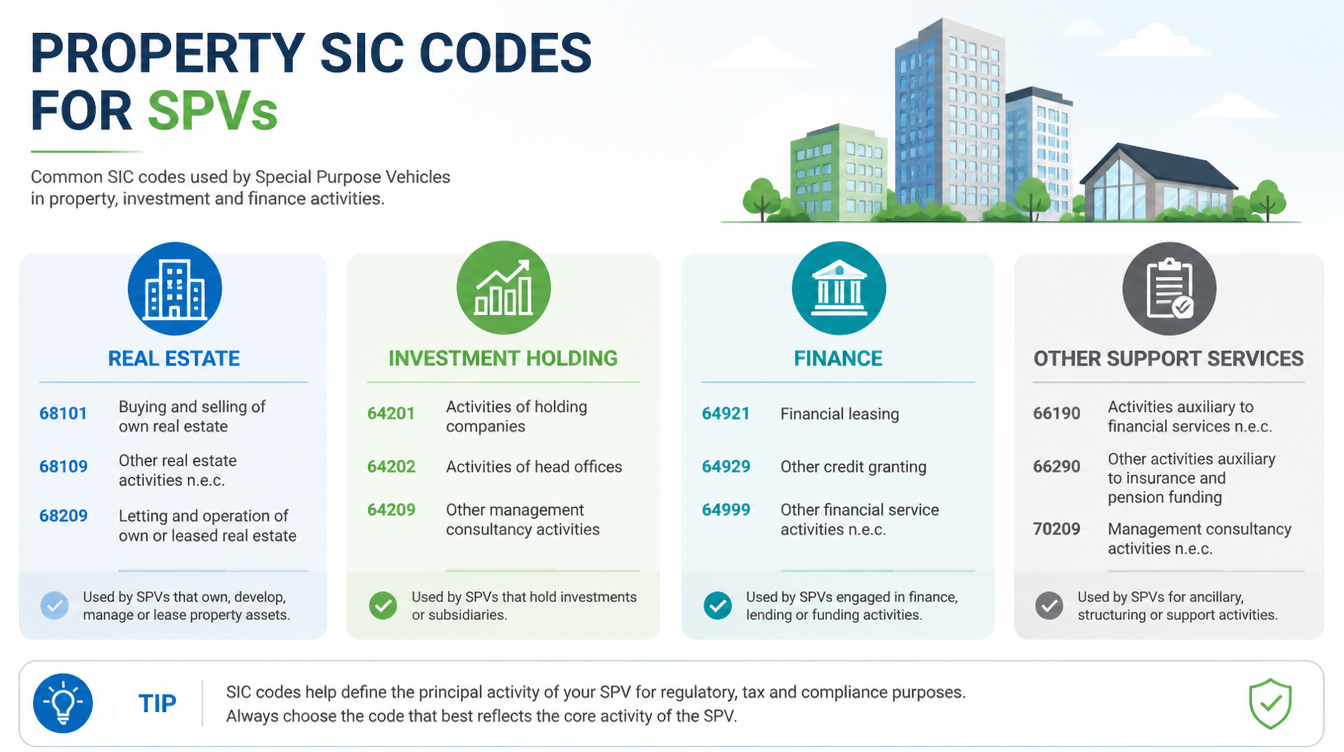
Understanding SIC Codes for Property SPVs
SIC codes, or Standard Industrial Classification codes, are numerical codes used to classify business activities in the UK. These codes are essential for various administrative purposes, including tax reporting and compliance with regulatory requirements. For property Special Purpose Vehicles (SPVs), selecting the right SIC code is crucial, as it defines the nature of your business and its activities.
When it comes to property SPVs, the SIC code you choose can impact everything from tax obligations to eligibility for financing options. For instance, if your SPV is primarily involved in property investment, the correct SIC code will help ensure that you are compliant with tax regulations specific to that sector. Moreover, it can influence your ability to secure loans or other financial products tailored for property investments.
Understanding the significance of SIC codes is particularly important in the context of property investment, as the wrong classification can lead to complications down the line. This is where expert guidance becomes invaluable. At Lockwell Finance, we specialize in helping clients navigate the complexities of SIC codes to ensure that your property SPV is set up for success.
Why Choosing the Right SIC Code Matters
Selecting the appropriate SIC code for your property SPV is not merely a bureaucratic formality; it has real implications for your business operations. The right SIC code ensures compliance with tax laws and regulations, which can vary significantly depending on your business activities. A misclassified SIC code could lead to tax audits, penalties, or even legal issues, making it imperative to get it right from the outset.
Additionally, the choice of SIC code can affect your SPV’s ability to attract investment and secure financing. For example, lenders often review SIC codes to assess the risk associated with lending to your SPV. If your SIC code does not accurately reflect your business activities, you may find it challenging to secure the funding you need. This can be particularly detrimental in the property sector, where timely access to capital is often critical for success.
Furthermore, an incorrect SIC code can hinder your eligibility for certain grants or funding opportunities tailored for specific sectors. This can limit your growth potential and restrict your ability to take advantage of favorable market conditions. Therefore, understanding the nuances of SIC codes and their implications is essential for any property SPV looking to thrive in a competitive landscape.
The Most Relevant SIC Codes for Property SPVs
Among the various SIC codes available, 68209 is particularly relevant for property SPVs. This code is designated for “Other letting and operating of own or leased real estate,” making it suitable for companies that primarily engage in property investment and management. By using SIC code 68209, your SPV can clearly communicate its business focus to regulatory bodies and financial institutions.
In comparison, other SIC codes may not accurately reflect the nature of your operations. For instance, SIC code 68100 pertains to “Buying and selling of own real estate,” which may not encompass the broader range of activities involved in managing and letting properties. Choosing a less specific SIC code could lead to misunderstandings about your business operations, affecting compliance and financing opportunities.
It’s also worth noting that while SIC code 68209 is widely used, there are other codes that may apply depending on your SPV’s specific activities. For example, if your SPV is involved in property development, you might consider SIC codes like 41100 for “Development of building projects” or 41201 for “Construction of commercial buildings.” Each of these codes has distinct implications for tax and regulatory compliance, making it vital to select the most appropriate one for your SPV’s activities.
How to Determine the Right SIC Code for Your SPV
Identifying the correct SIC code for your property SPV involves a systematic approach. Here are the steps you should follow:
- Assess Your Business Activities: Start by clearly defining the primary activities of your SPV. Are you focused on property investment, management, development, or a combination of these? Understanding your core business activities is crucial for selecting the right SIC code.
- Research SIC Codes: Once you have a clear understanding of your activities, research the relevant SIC codes. The UK government provides a comprehensive list of SIC codes, which can help you identify the most suitable options for your SPV.
- Consult with Experts: If you’re unsure about which SIC code to choose, consider consulting with a financial advisor or a specialist in property SPVs. At Lockwell Finance, our team has extensive experience in guiding clients through the SIC code selection process, ensuring compliance and strategic alignment.
- Document Your Choice: Once you’ve selected an SIC code, document your decision. This will provide a reference point for future compliance and reporting requirements.
Common mistakes to avoid include selecting an SIC code based solely on assumptions or outdated information. It’s essential to ensure that the code you choose accurately reflects your current business activities, as this can change over time. Regular reviews of your SIC code are advisable, especially if your SPV expands or shifts its focus.
Benefits of Using Lockwell Finance for SIC Code Guidance
Choosing Lockwell Finance for your SIC code guidance offers numerous advantages. Our team of experts specializes in property SPV structuring, ensuring that your business is set up for long-term success. We understand the intricacies of SIC codes and their implications for tax and compliance, allowing us to provide tailored advice that meets your specific needs.
Our clients have experienced significant benefits from our services, including:
- Increased Compliance: By ensuring that your SPV is classified correctly, we help you avoid potential legal issues and penalties associated with misclassification.
- Enhanced Financing Opportunities: Our expertise allows us to position your SPV favorably with lenders, increasing your chances of securing the capital you need for growth.
- Time Savings: Navigating the complexities of SIC codes can be time-consuming. Our team takes the burden off your shoulders, allowing you to focus on your core business activities.
Don’t just take our word for it—our clients have shared their success stories, highlighting how our guidance has positively impacted their property investments. By partnering with Lockwell Finance, you gain a trusted ally in your journey toward successful property investment.
Frequently Asked Questions About SPV SIC Codes
What is the process for changing SIC codes?
Changing your SIC code is a straightforward process. You will need to submit a form to Companies House, providing justification for the change. It’s essential to ensure that your new SIC code complies with the relevant regulations to avoid any issues.
Can I use multiple SIC codes for my SPV?
Yes, you can list multiple SIC codes for your SPV. However, it’s crucial to ensure that these codes accurately reflect your business activities. Review the implications for tax and compliance, as using multiple codes can complicate reporting requirements.
How does the SIC code affect my property investment?
Your SIC code determines your regulatory obligations and influences your tax treatment. It can also affect your eligibility for certain grants or funding, making it a critical factor in your property investment strategy.
What if my SPV operates in multiple sectors?
If your SPV operates in multiple sectors, choose the primary SIC code that best reflects your main activities. You may also consider additional codes for secondary activities. Consulting with a professional can help ensure that you make the right choices.
How often should I review my SIC code?
It’s advisable to review your SIC code annually or whenever significant changes occur in your business activities. Staying updated with regulatory changes and consulting with experts can help you maintain compliance and optimize your business structure.