

Understanding Murabaha Mortgages
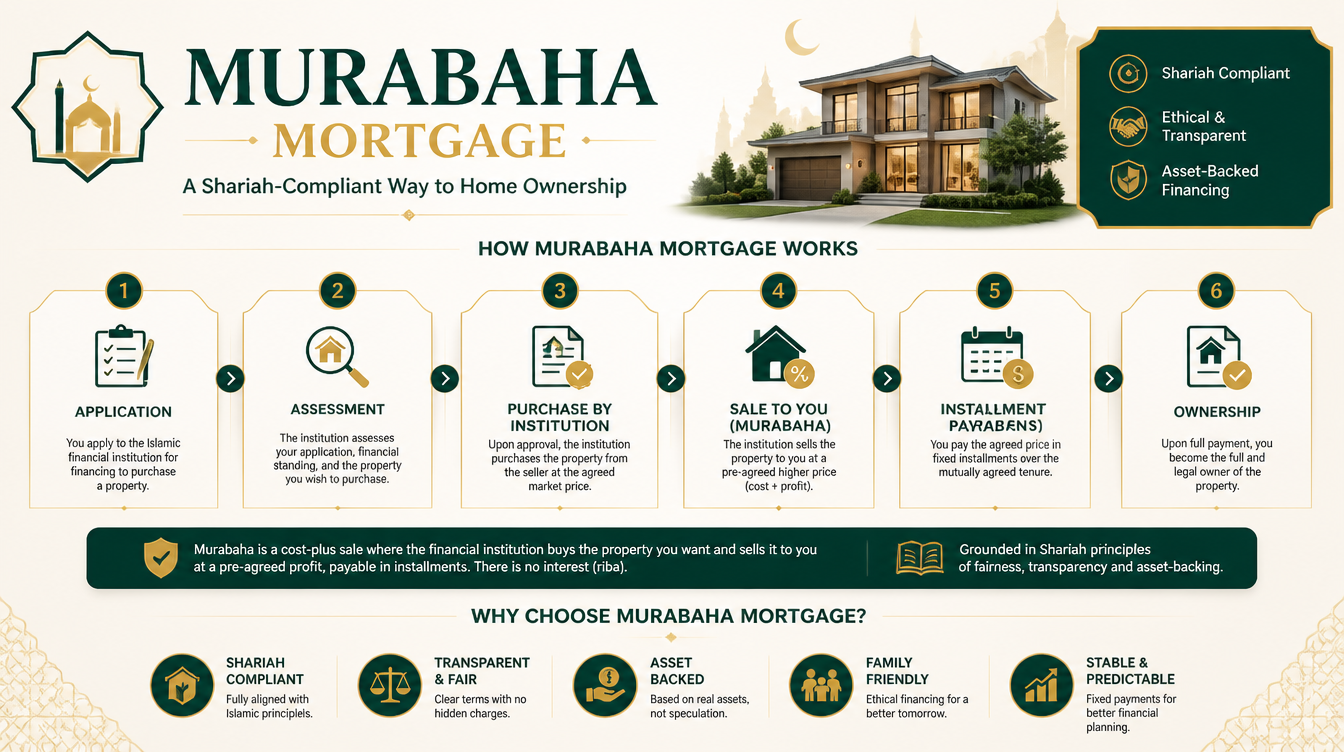
A Murabaha mortgage is a type of Islamic financing that allows individuals to purchase property in a manner compliant with Sharia law. Unlike conventional mortgages that involve interest payments, a Murabaha mortgage operates on a cost-plus basis. In this arrangement, the lender buys the property and sells it to the borrower at a predetermined profit margin. This structure ensures that the transaction adheres to Islamic principles, which prohibit interest (riba).
Key features of Murabaha financing include:
- Cost-Plus Pricing: The lender discloses the purchase price of the property and adds a profit margin, which is agreed upon by both parties. This transparency fosters trust and aligns with Islamic finance principles.
- No Interest Payments: Since the structure avoids interest, borrowers are not burdened by fluctuating rates, making it a stable option for financing.
- Asset-Backed Financing: The mortgage is secured against the property itself, ensuring that the lender has a tangible asset backing the loan.
- Fixed Payments: Borrowers typically benefit from fixed monthly payments, allowing for better financial planning and budgeting.
- Sharia Compliance: All aspects of the transaction are designed to comply with Islamic law, making it an attractive option for Muslim homebuyers.
Murabaha mortgages are gaining popularity in the UK as more financial institutions offer Sharia-compliant products. This trend reflects a growing recognition of the diverse financial needs within the UK’s multicultural society.
How Murabaha Mortgages Work in the UK
The process of obtaining a Murabaha mortgage in the UK involves several key steps:
- Application: The borrower submits an application to a financial institution offering Murabaha mortgages. This includes providing personal details, income information, and the property they wish to purchase.
- Assessment: The lender reviews the application, assessing the borrower’s eligibility based on income, credit score, and adherence to Islamic finance principles.
- Property Valuation: The lender conducts a valuation of the property to determine its market value. This step is crucial as it informs the purchase price and profit margin.
- Purchase Agreement: Once approved, the lender buys the property on behalf of the borrower. A purchase agreement is drafted, outlining the terms of the sale, including the profit margin.
- Sale to Borrower: The lender then sells the property to the borrower at the agreed price, which includes the profit margin. The borrower is now responsible for making monthly payments over the agreed term.
- Completion: Upon completion of the sale, the borrower receives the title to the property, and the mortgage is registered with the appropriate authorities.
In contrast to conventional mortgages, where interest rates can vary significantly, Murabaha mortgages offer a fixed cost structure. This stability is particularly appealing to borrowers who seek predictability in their financial commitments. Additionally, the asset-backed nature of Murabaha financing reduces the risk for lenders, as they have a tangible asset to secure the loan.
Benefits of Choosing a Murabaha Mortgage
Opting for a Murabaha mortgage comes with several advantages, particularly for those seeking Sharia-compliant financing:
- No Interest Payments: One of the most significant benefits is the absence of interest payments, which aligns with Islamic finance principles. This can lead to lower overall costs for borrowers compared to traditional mortgages.
- Financial Flexibility: The fixed payment structure allows borrowers to plan their finances more effectively, avoiding the uncertainties associated with fluctuating interest rates.
- Sharia Compliance: For Muslims, the assurance that their financing method complies with Islamic law is paramount. Murabaha mortgages provide peace of mind to those who wish to avoid interest-based transactions.
- Transparency: The clear cost structure fosters trust between lenders and borrowers. Both parties agree on the purchase price and profit margin upfront, eliminating hidden fees or unexpected costs.
- Asset Ownership: Since the mortgage is secured against the property, borrowers have a vested interest in maintaining and improving their homes, which can enhance property values over time.
These benefits make Murabaha mortgages an attractive option for many UK homebuyers, particularly within the Muslim community. As awareness of these products grows, more individuals are considering them as a viable alternative to traditional financing methods.
Eligibility Criteria for Murabaha Mortgages
To qualify for a Murabaha mortgage in the UK, applicants must meet specific eligibility criteria:
- Proof of Income: Lenders require documentation of stable income to ensure borrowers can meet their repayment obligations. This may include payslips, tax returns, or bank statements.
- Credit Score: A good credit score is typically necessary, as lenders assess the borrower’s creditworthiness. While some flexibility may exist, a solid credit history enhances the chances of approval.
- Adherence to Islamic Finance Principles: Applicants must demonstrate their commitment to Sharia compliance, which may involve providing details about their financial practices and ensuring they do not engage in interest-based transactions.
- Property Type: The property being purchased must meet specific criteria set by the lender, ensuring it is suitable for Murabaha financing.
Potential borrowers should consult with a financial advisor or a mortgage broker specializing in Islamic finance to navigate the application process effectively. Understanding the requirements and preparing the necessary documentation can significantly enhance the likelihood of securing a Murabaha mortgage.
Comparing Murabaha Mortgages with Other Islamic Financing Options
While Murabaha mortgages are a popular choice, several other Islamic financing options exist, each with its unique features:
- Ijara: This is a leasing arrangement where the lender buys the property and leases it to the borrower. The borrower pays rent, and at the end of the lease term, they may have the option to purchase the property. Ijara is often compared to conventional leasing but is structured to comply with Sharia law.
- Musharaka: This is a partnership arrangement where both the lender and borrower contribute to the purchase of the property. The borrower pays rent on the lender’s share while gradually buying out the lender’s stake. This model encourages shared ownership and investment.
When comparing Murabaha to Ijara and Musharaka, several pros and cons emerge:
Murabaha vs. Ijara
- Pros of Murabaha: Fixed payment structure, straightforward process, and no interest payments.
- Cons of Murabaha: The borrower must pay the full purchase price upfront, including the profit margin.
- Pros of Ijara: Lower initial payments, flexibility in leasing, and potential for ownership at the end of the lease.
- Cons of Ijara: Ongoing rental payments may be higher over time, and the borrower does not own the property until the lease ends.
Murabaha vs. Musharaka
- Pros of Musharaka: Shared ownership, potential for profit-sharing, and flexibility in payment structures.
- Cons of Musharaka: More complex arrangements, requiring detailed agreements on profit-sharing and ownership transfer.
Choosing the right Islamic financing option depends on individual circumstances, financial goals, and preferences. Consulting with a knowledgeable mortgage broker can help potential borrowers make informed decisions tailored to their needs.
Common Misconceptions About Murabaha Mortgages
Despite the growing acceptance of Murabaha mortgages, several misconceptions persist:
- Myth 1: Murabaha Mortgages Are Just Like Conventional Mortgages: While both provide financing for property purchases, Murabaha mortgages are structured to comply with Sharia law, avoiding interest payments and focusing on cost-plus pricing.
- Myth 2: They Are Only for Muslims: While primarily designed for Muslim borrowers, anyone interested in Sharia-compliant financing can explore Murabaha mortgages.
- Myth 3: Murabaha Mortgages Are More Expensive: Some believe that the profit margin in Murabaha financing makes it more costly than conventional mortgages. However, the total cost can be competitive, especially when considering the absence of interest payments.
Clarifying these misconceptions is crucial for potential borrowers. Understanding the true nature of Murabaha mortgages can empower individuals to make informed decisions about their financing options.
Real-Life Examples of Murabaha Mortgages
To illustrate the impact of Murabaha mortgages on home ownership in the UK, consider the following case studies:
Case Study 1: First-Time Homebuyer
A young couple in London sought to purchase their first home. They opted for a Murabaha mortgage due to its Sharia compliance. The lender purchased a property for £300,000 and sold it to the couple at a profit margin of £30,000, resulting in a total mortgage of £330,000. With a fixed repayment plan over 25 years, they appreciated the stability and predictability of their monthly payments.
Case Study 2: Family Home Upgrade
A family looking to upgrade their home chose a Murabaha mortgage for their new property. The lender acquired a house for £450,000 and added a profit margin of £45,000. The family valued the transparent cost structure, allowing them to budget effectively for their future. They felt confident in their investment, knowing they were adhering to their financial principles.
These examples highlight how Murabaha mortgages can facilitate home ownership while aligning with individual values and financial goals. As more individuals become aware of these options, the demand for Sharia-compliant financing is likely to increase.
The Future of Murabaha Mortgages in the UK
The landscape of Islamic finance in the UK is evolving, with Murabaha mortgages at the forefront of this growth. Several trends are shaping the future of these financial products:
- Increased Demand: As the Muslim population in the UK continues to grow, so does the demand for Sharia-compliant financial products. Financial institutions are responding by expanding their offerings, including Murabaha mortgages.
- Technological Advancements: The rise of fintech companies is making it easier for borrowers to access Islamic financing options. Online platforms are streamlining the application process, making it more accessible for potential borrowers.
- Regulatory Support: The UK government is increasingly recognizing the importance of Islamic finance, providing a supportive regulatory environment that encourages innovation and competition in the market.
However, challenges remain, including the need for greater awareness and understanding of Murabaha mortgages among potential borrowers. Financial education initiatives can play a crucial role in demystifying these products and helping individuals make informed decisions.
Frequently Asked Questions
What is a Murabaha mortgage?
A type of Islamic financing where the lender buys a property and sells it to the borrower at a profit margin.
How does a Murabaha mortgage differ from a conventional mortgage?
Murabaha mortgages comply with Sharia law, avoiding interest, while conventional mortgages involve interest payments.
Who is eligible for a Murabaha mortgage in the UK?
Eligibility typically includes proof of income, a good credit score, and adherence to Islamic finance principles.
What are the benefits of a Murabaha mortgage?
No interest payments, compliance with Sharia law, and potential for financial flexibility.
Are there any risks associated with Murabaha mortgages?
Potential risks include market fluctuations affecting property value and the need for thorough understanding of terms.
